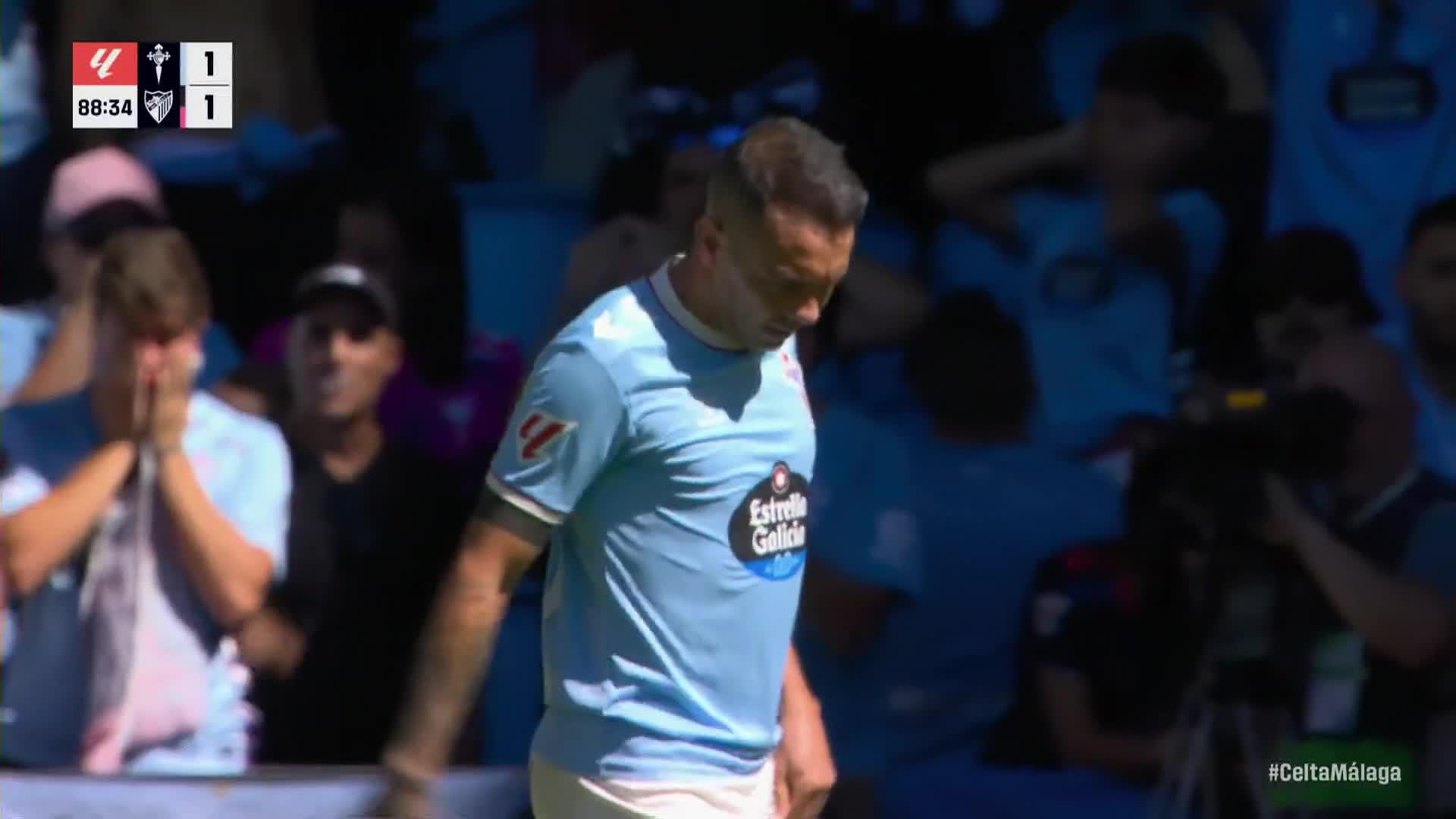
A stalemate that satisfies nobody. Celta Vigo led for more than 40 minutes at Bala idos and looked to be edging towards the victory their season so badly craves, only for M laga to rise up from a corner in the 83rd minute and steal a point neither side can be entirely happy with. When Adri n Ni no ose to head Pablo Mart nez cross nto the top corner, he did more than equalise. He drained the life out of a stadium that had spent the evening willing a breakthrough it thought had already arrived.
This was the meeting of two sides marooned in the wrong half of the table, both still hunting a first league win of the campaign. Celta began the day 14th, M laga three places and one point beneath them, and by the final whistle little had changed except the growing sense that draws, however useful for the confidence, are not going to lift either club anywhere meaningful. A point apiece keeps the wolves at a distance without ever silencing them.
Ferran Jutgl s goal deserved to win it. Struck cleanly from outside the box and curled into the bottom right corner, it was the kind of moment that ought to settle a nervy afternoon and send a struggling team home smiling. Instead it became a footnote, the opener that was not quite enough, undone by a single lapse from a defence that has now conceded six times in its opening six matches.
Jutgl sm mentous
For a long while this had the feel of an afternoon in which Celta might finally break their duck. The pressure had been building, the crowd growing restless, and then in the 41st minute the release came. Hugo Gonz lez fed the ball to Jutgl s on the edge of the area, and the striker needed no second invitation, opening his body and steering a right-footed shot beyond the goalkeeper into the bottom corner.
It was a goal of composure amid the anxiety, the sort of finish that hints at a player carrying his side rather than being dragged down by their malaise. Jutgl s has been asked to shoulder much of Celta creative burden this season, and here he answered, timing his run and his strike to send Bala idos into the interval believing the wait was over.
The lead, though, arrived late in the half, and that left a long road still to travel. Celta went in ahead but far from secure, a single goal always a fragile thing against a team with nothing to lose. The warning signs were there for anyone prepared to read them, and the second half would expose them cruelly.
M lagas eprieve
M laga arrived in Vigo as the division most porous travellers, eight goals already shipped in five outings, and for much of the contest they offered little to suggest that record would improve. Yet the beauty of a team that refuses to fold is that it needs only one moment, and theirs came from the most orthodox of sources. A corner, a delivery, a header.
Pablo Mart nez swung the ball in from the set piece, and Adri n Ni no attacked it with the conviction of a man desperate to matter. His header from the centre of the box arced into the top right corner, unanswerable, and suddenly the visitors had the point that had seemed beyond them. For a side without a win, and with a defensive record to be ashamed of, it was a moment of defiance worth clinging to.
The goal spoke to a familiar failing on Celta part. Having controlled the tempo and taken the lead, they surrendered it to a single corner, undone by the collective lapse in concentration that so often haunts teams low on confidence. One flick of Ni nos head and all that patient work counted for nothing.
Table tells the tale
The arithmetic is unforgiving for both. Celta Vigo remain 14th on four points, their record now four draws, two defeats and not a single victory to show for six rounds. Three goals scored, six conceded: this is a team competent enough to stay in matches but lacking the ruthlessness to finish them. Four of their six games have ended level, a pattern that speaks of a side forever close and never quite there.
M laga sit 17th on three points, still winless, with three draws and two losses and a goal difference that reads two for, eight against. This away point, snatched so late, is precisely the kind of result a struggling team must learn to build upon. It will not shift them clear of danger, but it stops the slide, and for a defence as leaky as theirs, keeping any sort of foothold matters.
Neither club can pretend a draw is progress in isolation. Both remain rooted among the early strugglers, both still searching for the first win that transforms a season from anxious to buoyant. The longer that victory eludes them, the heavier the pressure grows, and the more these hard-won points feel like postponements rather than solutions.
What comes next
For Celta, the frustration will linger longer than the reassurance. To lead for so long, to score a goal as good as Jutgl s , and then to let it slip from a set piece is the sort of setback that gnaws at a dressing room already low on belief. The performance carried enough quality to suggest a first win is not far away, but the failure to close out the contest is the recurring theme they must urgently address.
M laga, by contrast, will travel home with something approaching relief. A point earned in the closing stages, plucked from a game that was drifting away, is the kind of result that can steady a fragile campaign. Ni nos head may prove a small turning point or merely a stay of execution, but for now it keeps their heads above the water.
Both sides know the reckoning is only delayed. The draws are mounting, the wins are not coming, and the table offers no comfort to teams that keep settling for a share of the spoils. Sooner or later, one of these afternoons must be seized outright. At Bala idos, neither side proved willing, or able, to do so.