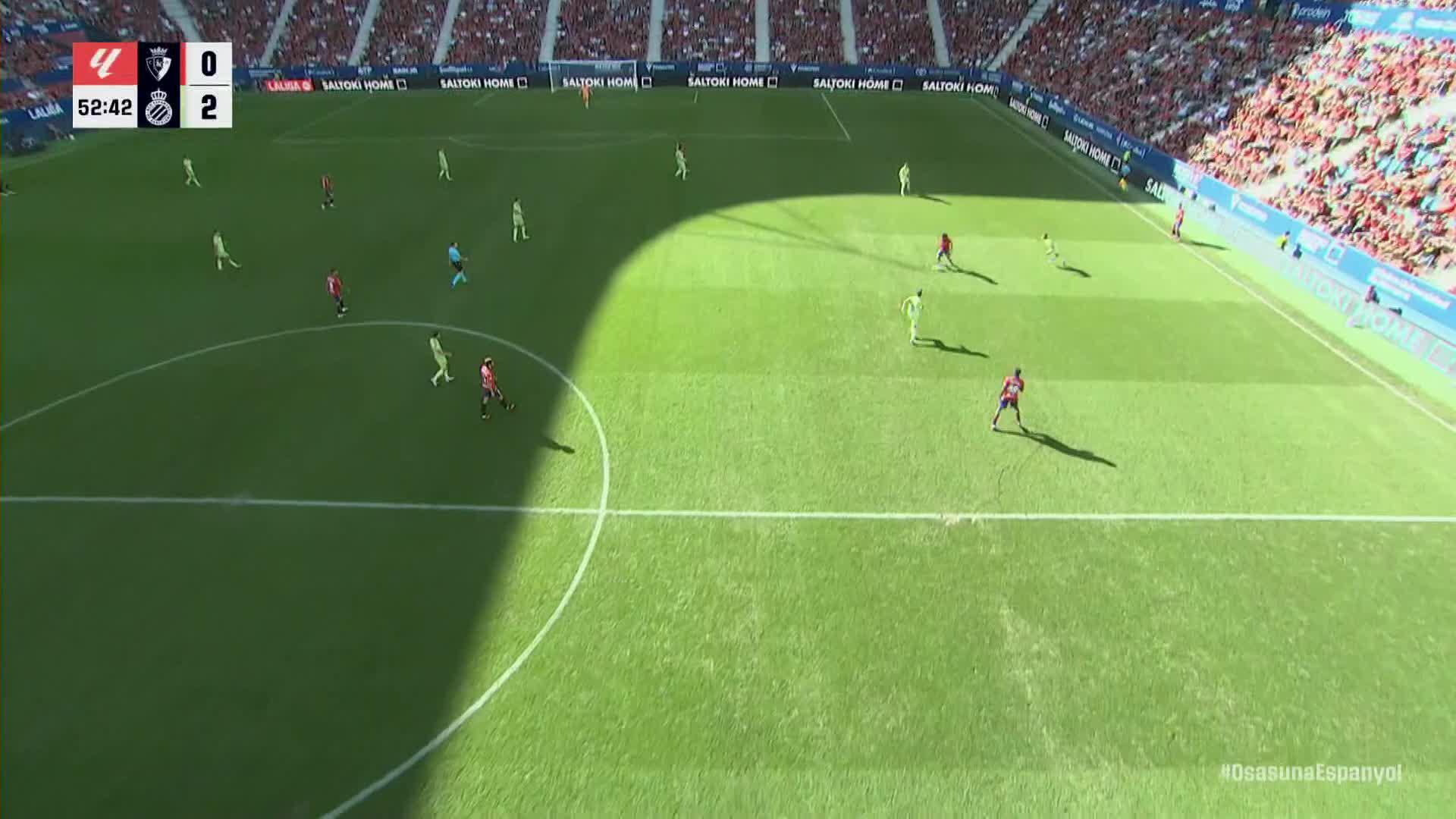
Some games are decided in the small print of the second half, wrestled to the ground in the last twenty minutes. This was not one of them. Espanyol arrived at El Sadar, took what they wanted inside a quarter of an hour, and spent the rest of the afternoon protecting the spoils. Osasuna, who had barely had time to settle into the contest, were two goals down before the game had drawn a proper breath.
The scorer of both was Roberto Fernández, a striker in the sort of ruthless mood that turns a routine early-season Saturday into a chastening one for the hosts. Twice he was found in the danger zone, twice he finished from close range, and twice the noise inside El Sadar drained away. By the time the interval arrived, the only question left was whether Osasuna could restore any pride, and the answer, in the end, was no.
A 0-2 scoreline flatters neither side beyond the truth of it. Espanyol were sharper, quicker to the decisive moments, and clinical when it mattered. Osasuna, for all their familiarity with the ground beneath their feet, never found a way through a visiting side content to sit on their lead and let the clock do the rest.
Two-goal blitz
The opening goal came before many in the stands had found their seats. In the third minute, Marcos Fernández swung in a cross and Roberto Fernández was there to meet it, a left-footed finish from very close range steered into the centre of the goal. It was the kind of start that flips the psychology of a match on its head, handing the visitors the initiative and forcing the hosts to rewrite their plans on the fly.
There was no respite. On seventeen minutes the lead doubled, and again Roberto Fernández was the executioner. This time Omar El Hilali provided the supply, and the striker adjusted to convert with his right foot, tucking the ball into the bottom-left corner from close in. Two goals, two feet, two assists from two different providers — a striker feasting on service and a defence unable to cut off the supply lines.
For Osasuna, the double blow carried a particular sting. To concede once inside the first few minutes is careless; to concede again before the game has reached its first drinks break suggests something more troubling about the way the afternoon was set up. The hosts were left with more than seventy minutes to find two goals against opponents who had every reason to defend deep and deny them space.
Osasuna's blunt afternoon
The chase, when it came, lacked the venom required. Osasuna have scored just five goals in five outings this season, and that shortage of firepower was laid bare against a side happy to invite pressure and repel it. The home crowd urged their team forward, but the urgency rarely translated into clear openings, and Espanyol's back line held its shape with the calm of a team that knew the game was already theirs.
There is a pattern here that Osasuna will not enjoy. Their record of five scored and eight conceded tells the story of a team that leaks at one end and cannot make up the difference at the other. Conceding twice in the opening quarter of this match only sharpened those concerns, and the failure to muster a response before the break drained belief from a stadium that usually provides its team with a fierce edge.
By the closing stages the contest had settled into a resigned rhythm, Osasuna probing without conviction and Espanyol seeing out the win with professional economy. El Sadar, so often a fortress of noise and defiance, fell quiet long before the final whistle confirmed what everyone had suspected since the seventeenth minute.
What the table says
The two clubs went into the weekend level on seven points, twins in the standings with identical records of two wins, one draw and two defeats. The difference between them was goals, and this result only widened that gulf. Espanyol's tally now reads eight scored, five conceded; Osasuna's is the exact inverse, five for and eight against, a symmetry that captures the contrasting fortunes of two evenly matched sides.
Victory lifts Espanyol to seventh, a tidy perch in the early La Liga table and evidence that their goals are coming from a striker in form. Roberto Fernández's brace does more than win three points; it hands his side momentum and a positive goal difference to build upon. For a team that could easily have drifted in the pack, this was a statement of intent delivered with efficiency rather than flourish.
Osasuna, by contrast, slip to eleventh and are left to reflect on an afternoon that unravelled almost before it began. The points tally may be respectable enough this early, but the manner of the defeat — flat, out of ideas, undone by a fast start they never recovered from — will gnaw at them. A home game is meant to be an opportunity; this one turned into a lesson.
The road ahead
For Espanyol, the task now is to bottle this. A striker scoring twice in seventeen minutes is a resource to be treasured, and the challenge for the visitors will be sustaining the sharpness that made El Sadar look so straightforward. On this evidence they have the cutting edge to trouble anyone, and a positive goal difference gives them a platform from which to push higher up the table.
Osasuna face the harder reckoning. The defensive frailty that has dogged their opening five matches showed no sign of easing, and the attacking blunt-ness that has limited them to five goals was in plain view once more. Something must change if they are to climb clear of mid-table, whether in the shape of their starts or the sharpness of their finishing.
This, though, belonged to Espanyol and to Roberto Fernández. Two touches inside the box, two goals, and a job all but done before the game had properly opened up. Osasuna will remember the sinking feeling of those first seventeen minutes for some time. Their visitors will remember them rather more fondly.